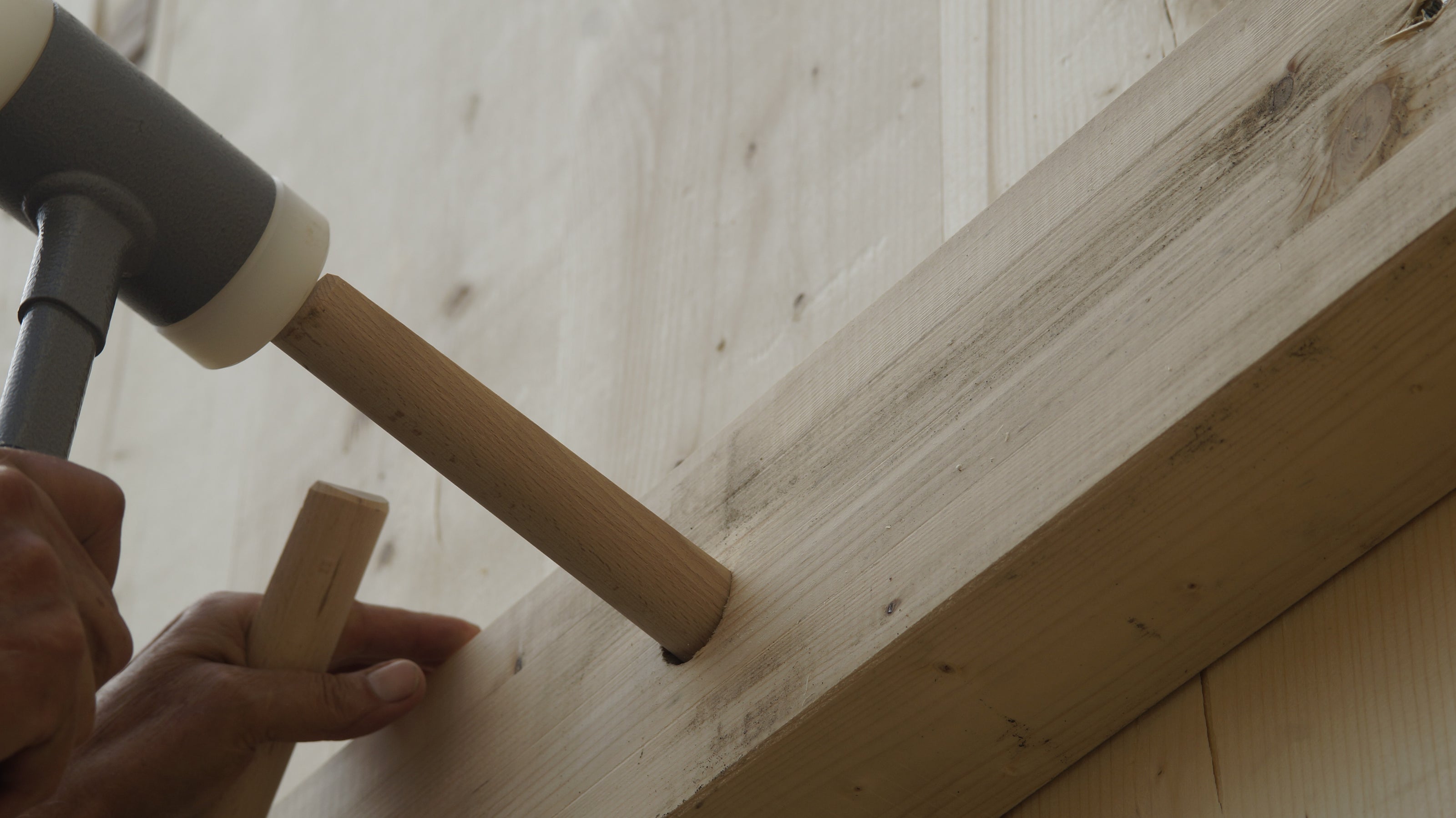
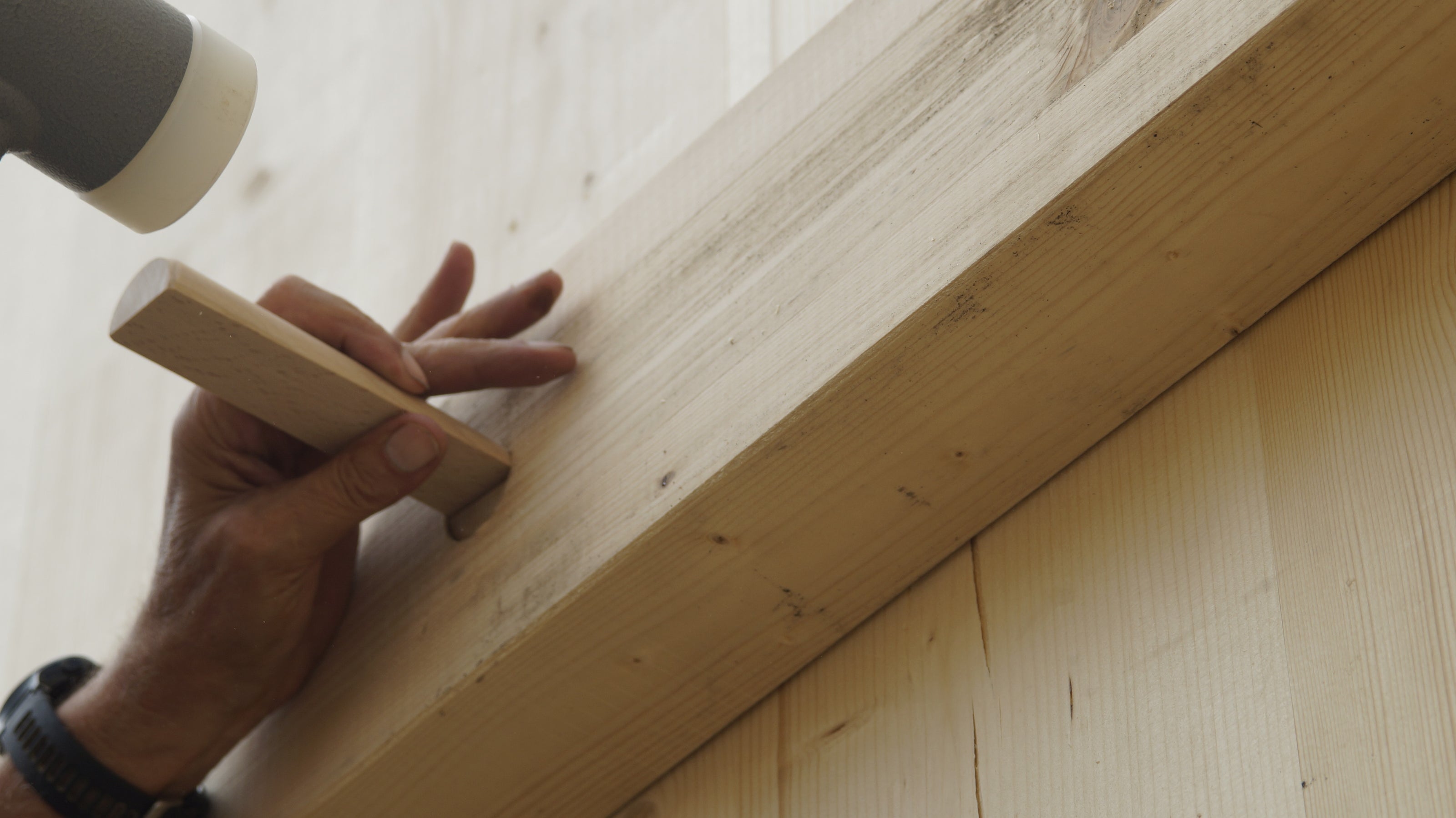
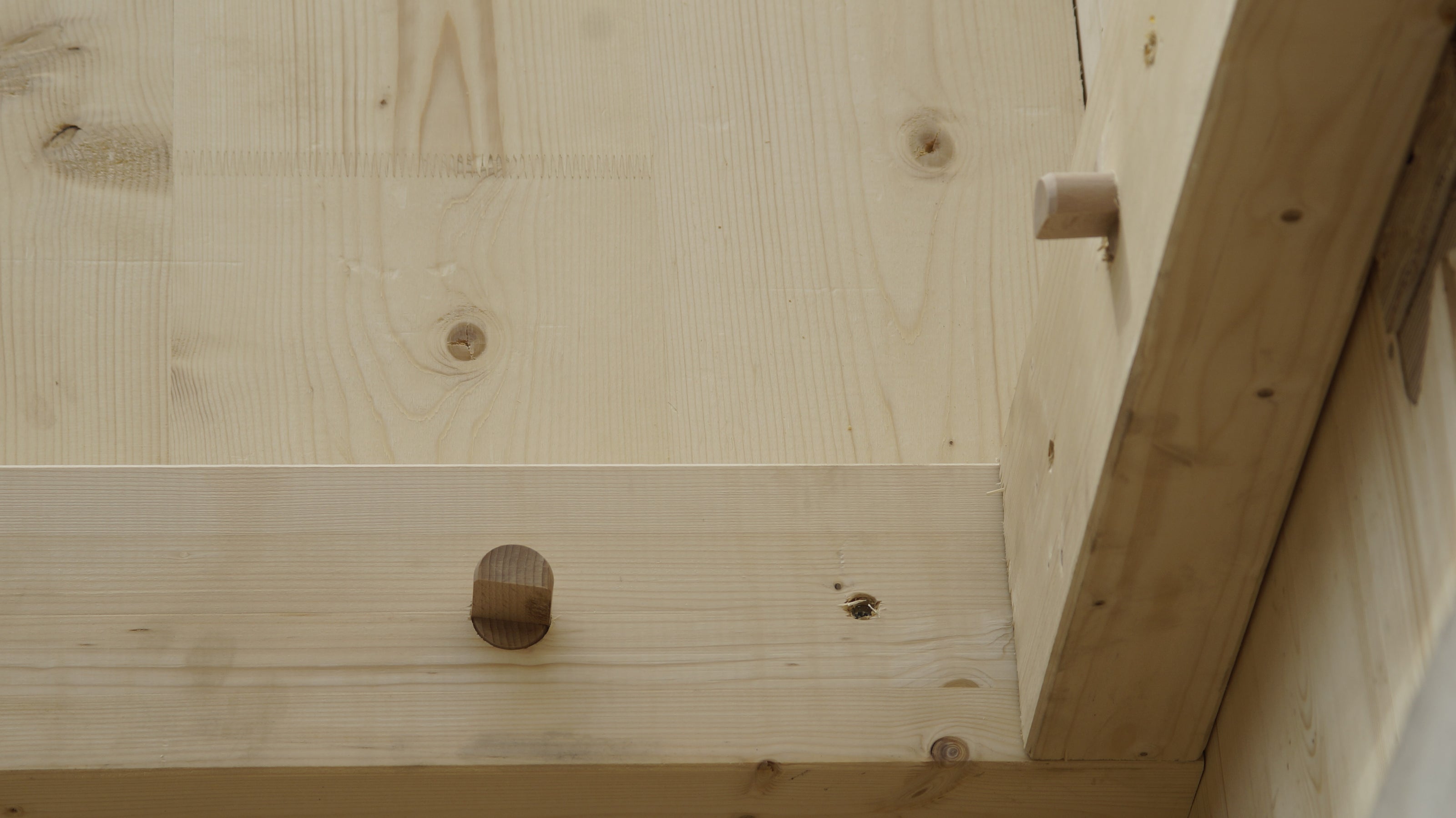
X-fix clamping dowels – conically split

Frequently asked questions about the X-fix RSD wedge dowel (conically split)

Where are X-fix RSD dowel connectors used?

Application: Connection of solid timber construction elements, such as ceilings with walls.

"Splicing" (lengthening) of timber construction elements (development of a test project at TU Graz LBS Murau) connecting columns and ceiling elements, e.g., in the HasleTre project in Stockholm

What are the advantages of X-fix tension dowels?

The X-fix KS tension dowel connection is also ideal for attaching and positively securing so-called "bearer beams" to walls, which serve as supports for ceiling elements. This application enables quick and secure assembly as well as a permanently stable connection between wall and ceiling elements.

FIRE PROTECTION:
In the event of a fire, firefighters can generally better assess the risk of collapse in timber constructions and timber-to-timber connections than in steel or reinforced concrete buildings. Even timber buildings with metallic fasteners (e.g. steel) pose particular risks, as these can start to glow in the event of a fire. As a result, they lose their load-bearing capacity, which can lead to the failure of components and the collapse of entire structures.

What material is the X-fix clamping dowel made of?

primarily made of solid beech wood

Special versions in oak, ash, etc. are also available.

What X-fix clamping dowel sizes are available?

Standard Diameter: 35 mm

Lengths: 200/250/300/350/400 mm

Special versions: Diameter from 25 to 100 mm
Lengths up to 1,000mm upon request


What approvals/tests are there for this?

Test report from BOKU Vienna of December 16, 2024 (on request)

Are there planning aids?

-

Are there any measurement aids?

-

Video

Your message to us: