1. Fast & Tool-Free Assembly
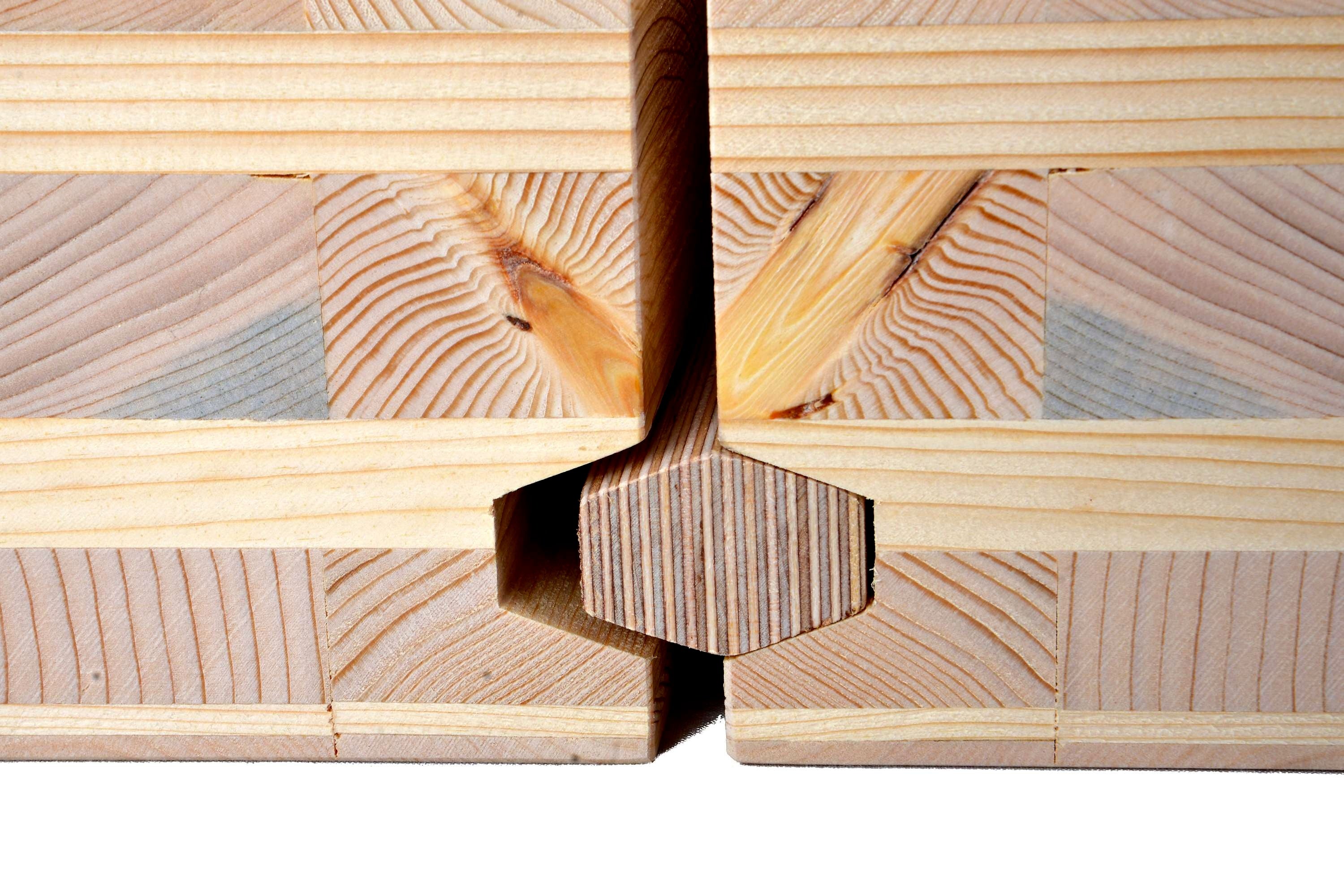
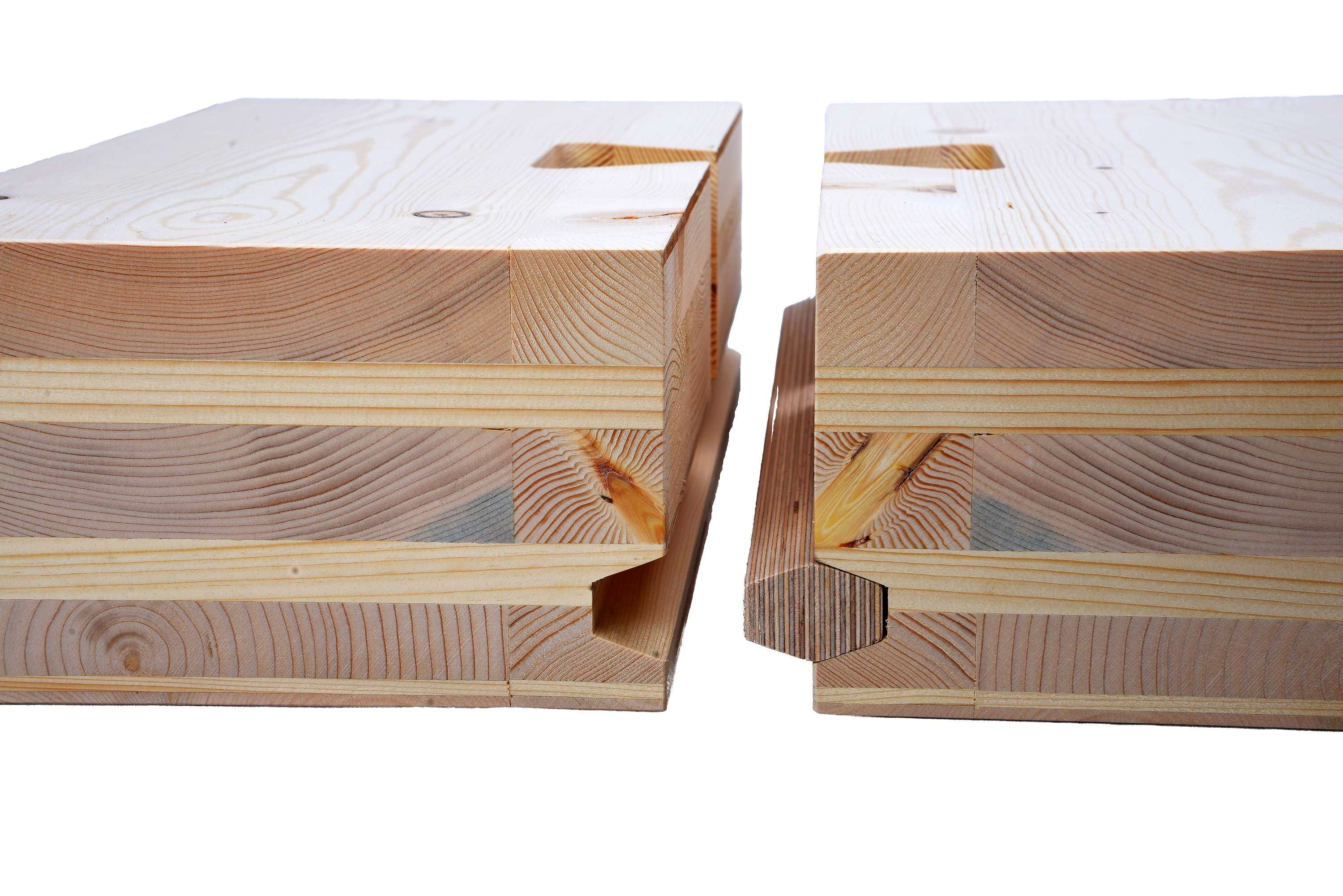
- The X-fix C connector is a self-tensioning plug-in connector that can be assembled without additional tools.
- Assembly time is significantly reduced as no screwing or drilling is necessary.
2. Strong & Precise Connection
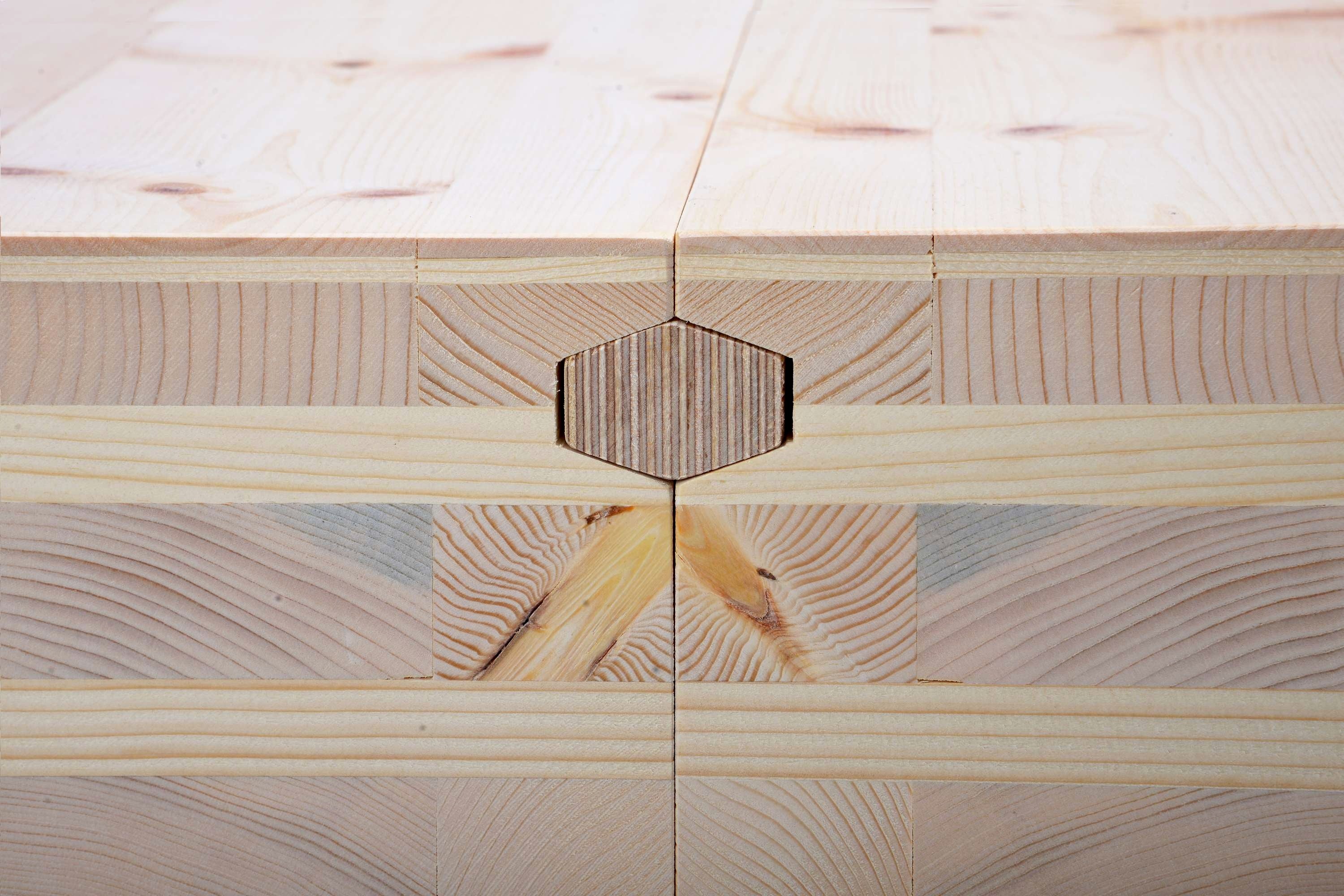
- The combination with a loose tongue enables precise alignment of the components.
- The connection is form-fitting and transmits high shear and transverse forces, which is particularly important in timber construction (e.g., for ceiling and wall elements).
3. Hidden, Visually Appealing Solution
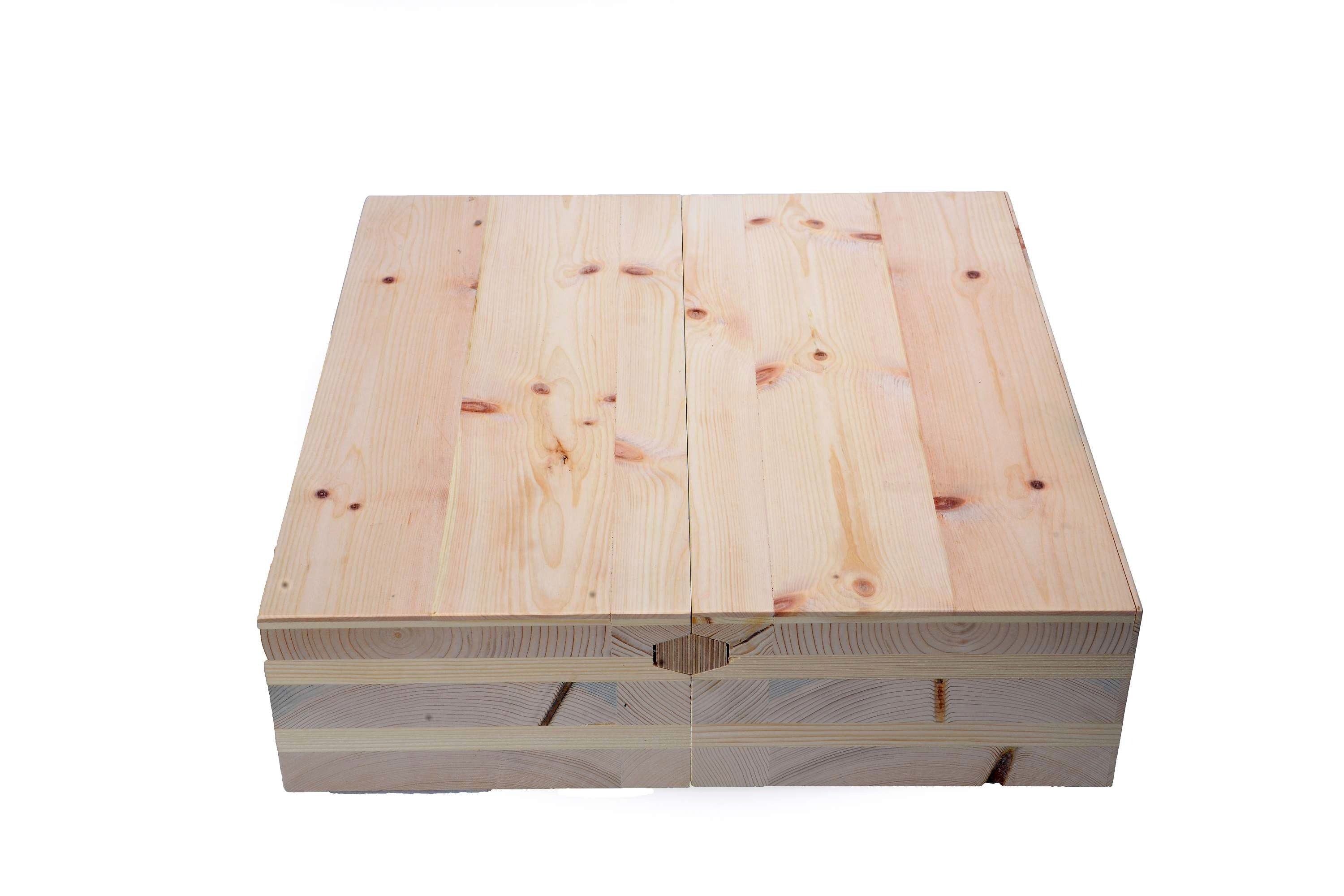
- The connection is not visible (recessed), which offers aesthetic advantages, especially with visible wooden surfaces.
4. Reversibility
- The connection can be reopened, which is very helpful for temporary structures or subsequent modifications.
5. Efficiency in Element Construction / Prefabrication
- Ideal for modular timber construction and workshop prefabrication:
- Components can be precisely prepared and quickly and securely connected on the construction site.
- Reduces assembly times and increases cost-effectiveness.
6. Compatibility with CNC Manufacturing
- The geometries of X-fix C and loose tongue connections can be precisely manufactured with CNC machines, which makes series production efficient.
7. Contribution to Fire Protection
- Due to the tight fit and form-fitting connection, joints can be reliably sealed – this helps to prevent smoke and flame transfer in case of fire (in combination with suitable materials and sealants).